Petrix
Timeline:
12 weeks, Jan. - Apr. 2026
Role:
Product Designer
Team:
Self, Norah Li
Tools:
Figma
Background
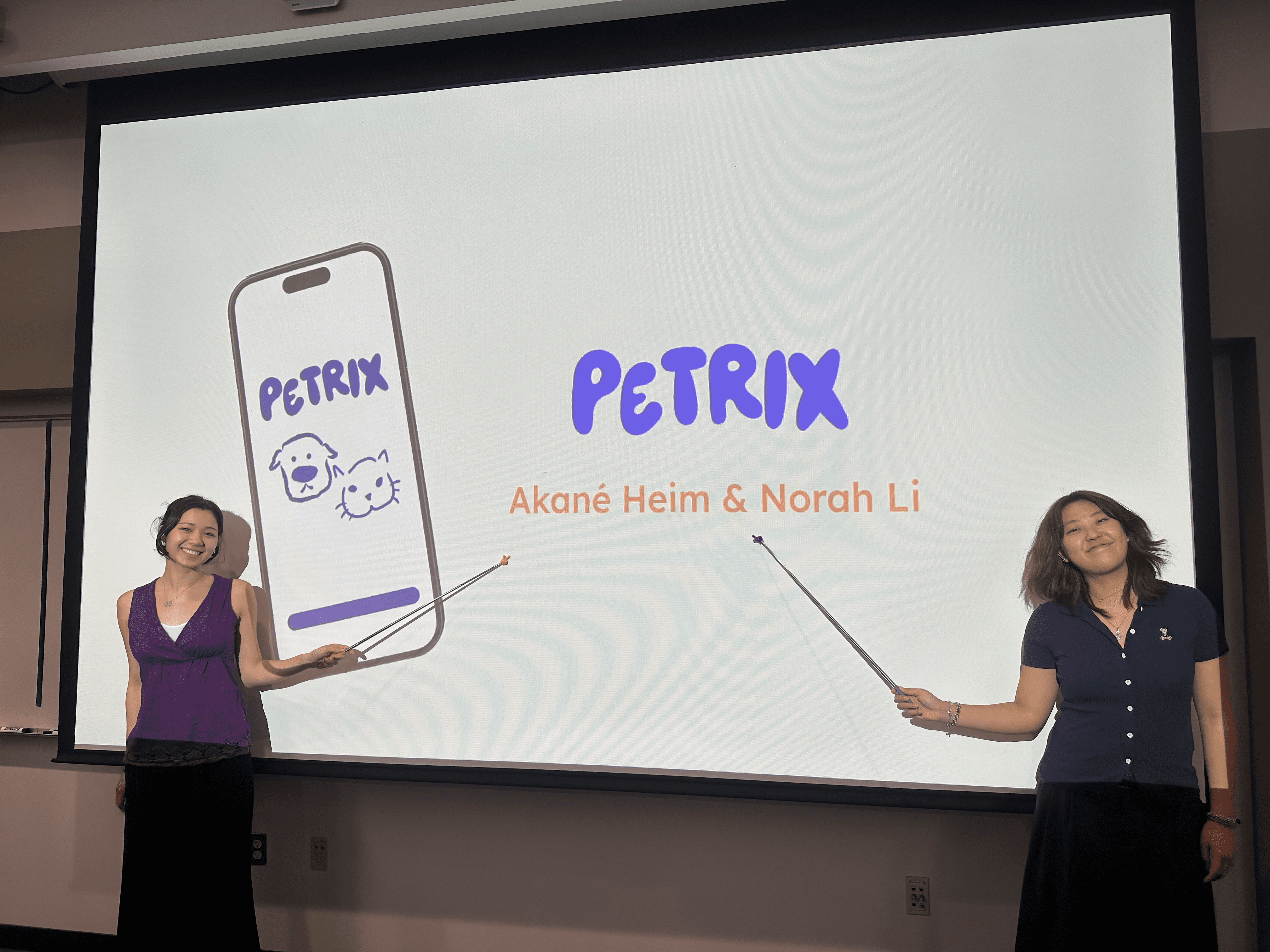
Petrix is an app my partner Norah Li and I developed during a 12-week UX/UI design intensive for Bits of Good, the Georgia Tech chapter of Hack4Impact.
The app allows pet owners to easily store documents, keep track of tasks and metrics related to their pet’s health, and strengthen their confidence in preventative care. I focused on the UI design across several features as well as overall visual identity, while my partner handled the remaining features and individual components.
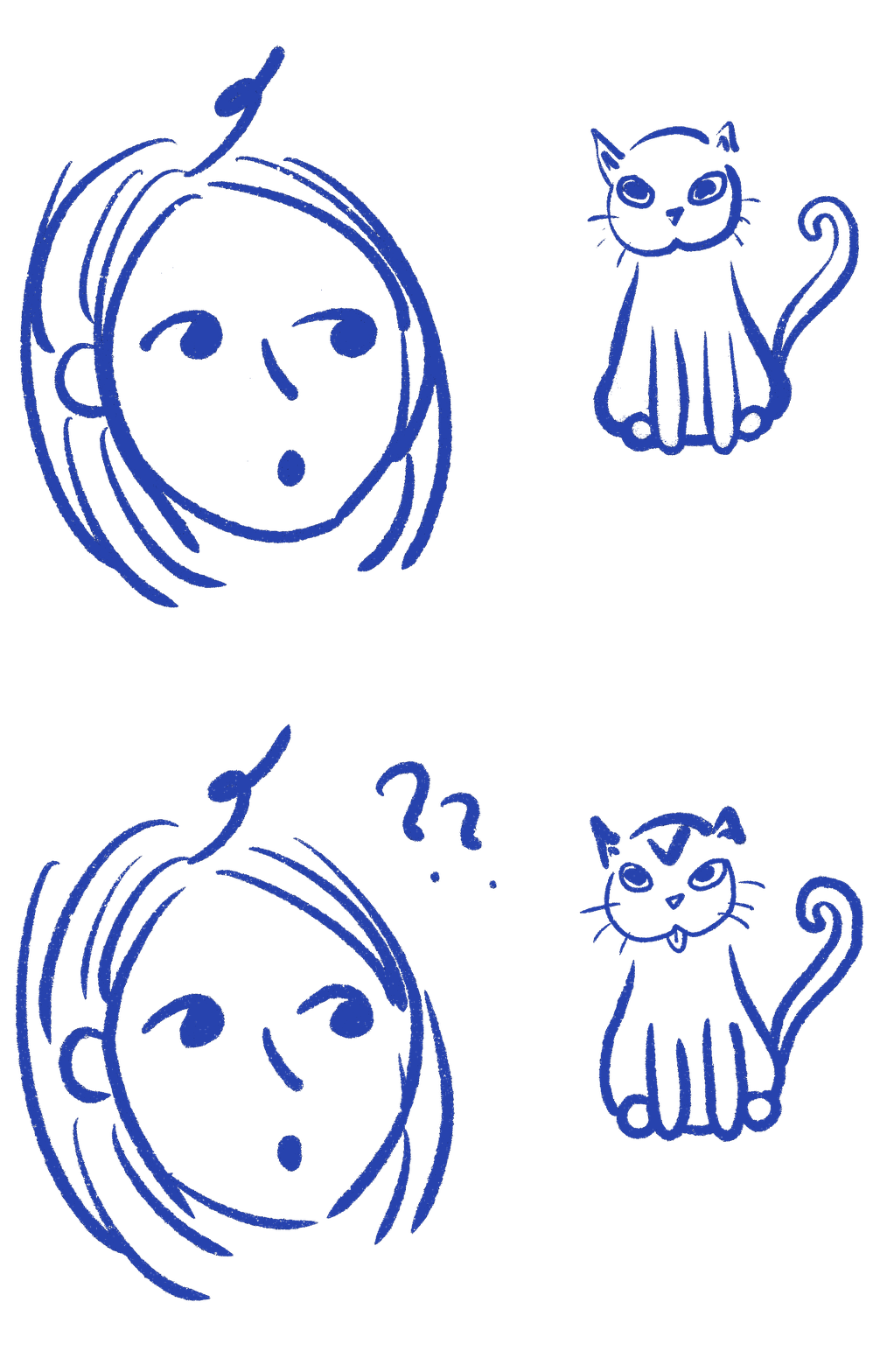
We built this after watching people we care about struggle to stay organized, miss important health milestones, and feel lost in the early days of new pet ownership.
of owners reported less anxiety when informed about preventative care
Kogan, L.R. (2024). JAVMA. doi.org/10.2460/javma.24.07.0438
of owners want proactive reminders about their pet’s preventative care
Kogan, L.R. (2024). JAVMA. doi.org/10.2460/javma.24.07.0438
despite this, there was a
2.7%
decrease in vet visits between 2021 - 2023
To us, this was a small but important signal that people want to stay on top of their pets’ health without constant visits to the vet.
II. Research
Affinity Maps
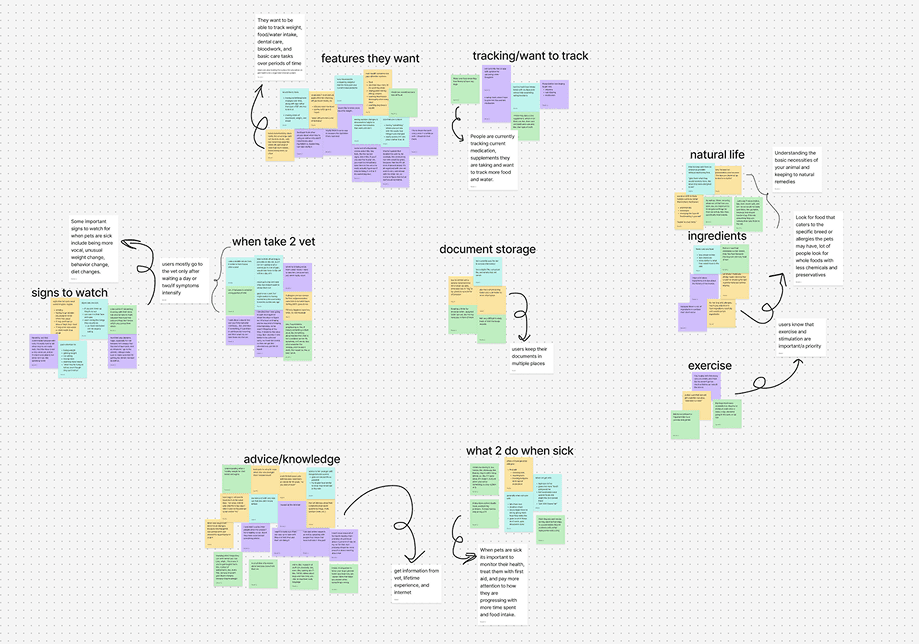
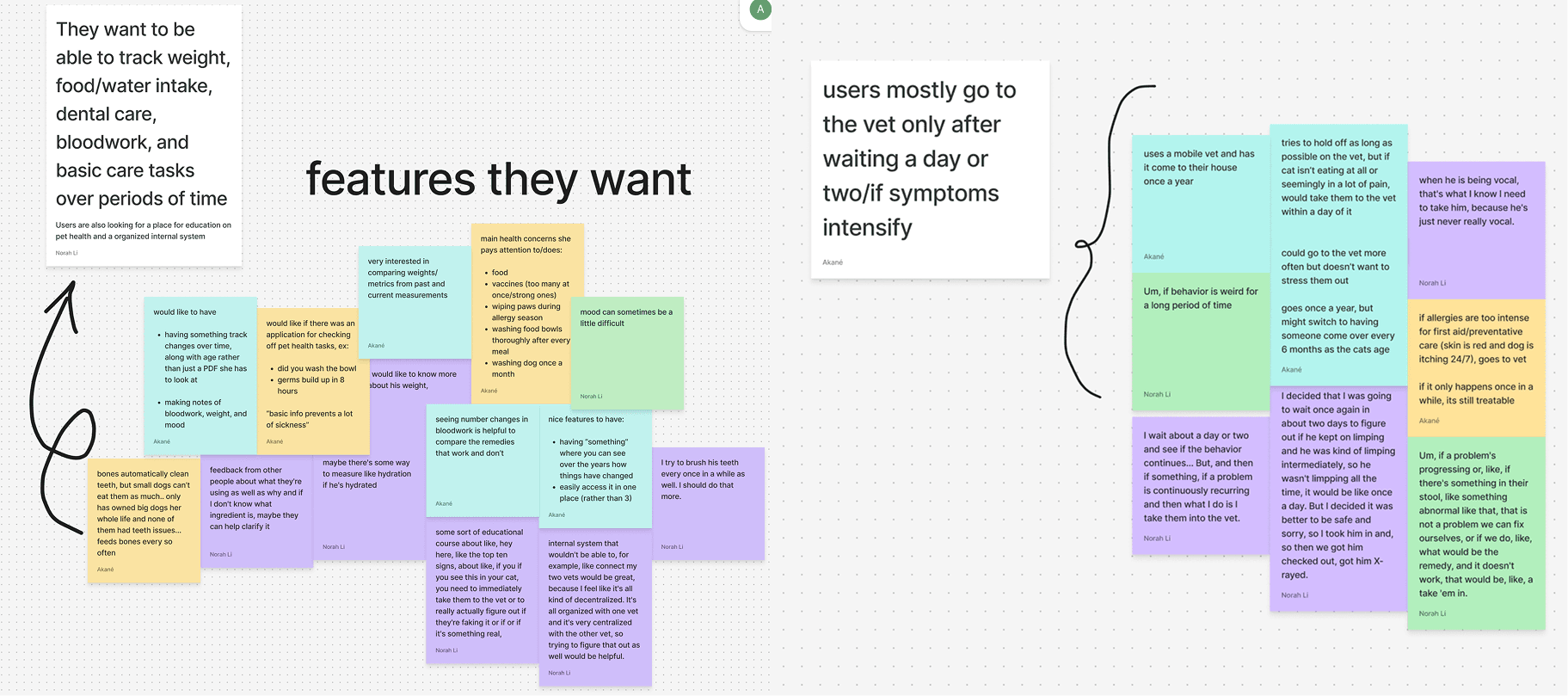
We wanted to verify our experience against other primary and secondary research. To do so, we conducted in-depth interviews with several pet owners, each with varying backgrounds and age to account for the variety of experiences owners may have. We took important points from the interviews and created an affinity map, which we then distilled into general statements about what users said they wanted.
We went in with the goals of understanding what owners like to track about their pets, how apps can help educate users on preventative care, and what the pain points are of organizing pet documents.
Competitive Analysis
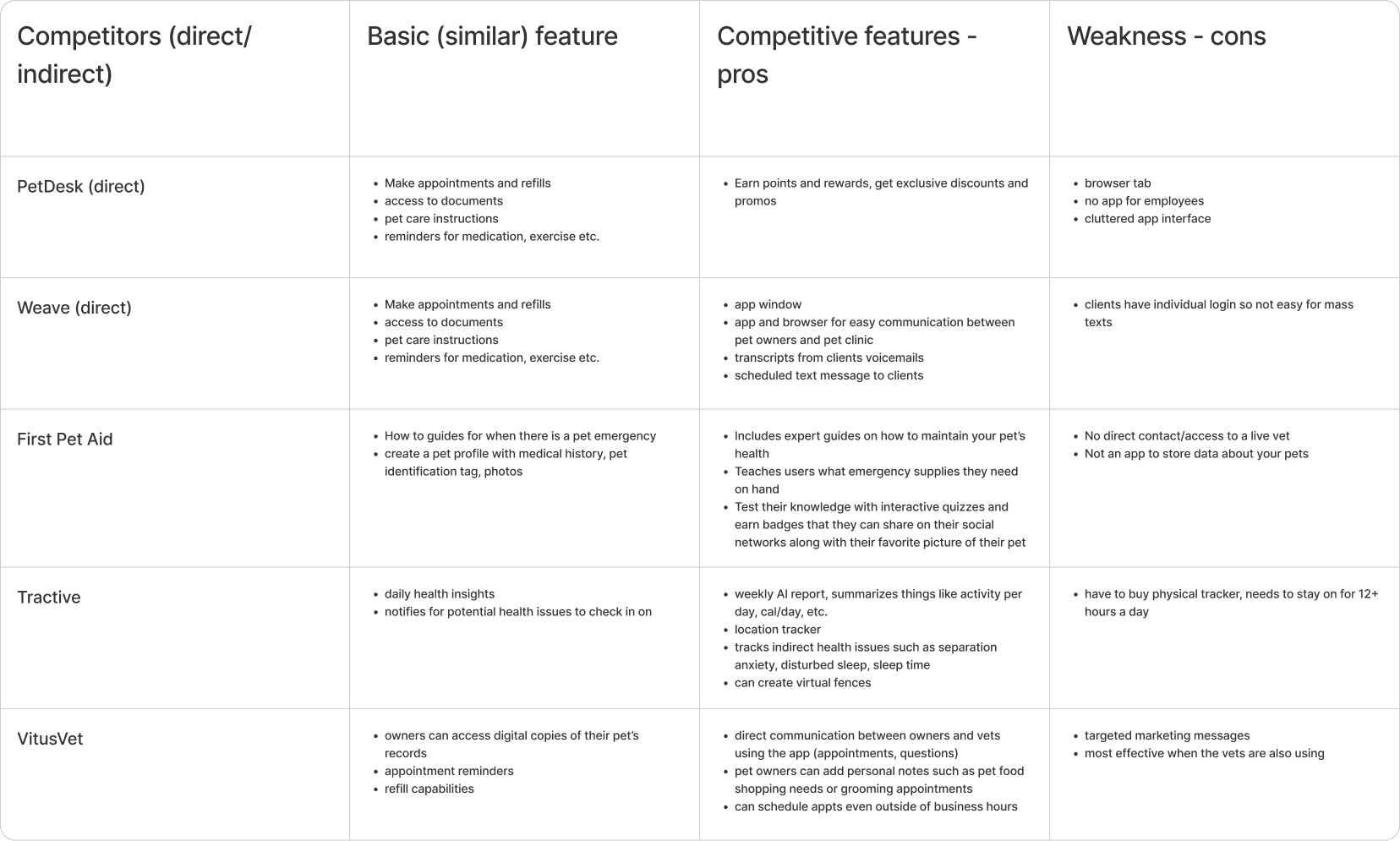
Additionally, we did a competitive analysis and discovered a few common patterns:
Many of our competitors had vet-owner coordination and record management as features, though they relied on vets to adopt the app or required the purchase of external hardware to track certain metrics. Though we identified the external hardware as something of a weakness, it also had a competitive edge due to its ability to record precise metrics.
Key Findings
Based on our research we discovered a few key findings and patterns:
Owners want to know how to prevent health issues
Interviewees think it is important to understand their pets’ behaviors as a means of preventative care
Reddit users say small preventative habits can save lots of money down the road
“Good food prevents a lot of vet bills. And being equally careful of treats.”
People want one place for their pet documents
Participants have expressed desire to sort their documents in one centralized place for easy access
Participants currently keep their documents in multiple places: physical folders, digital folders, emails, vet offices, etc.
“...some sort of internal system… would be great, because I feel like it's all kind of decentralized.”
People want to see their pets’ health over time
Interviewees think it is important to understand their pets’ behaviors as a means of preventative care
Users want consistent reminders for recurring care tasks — nails, dental hygiene, and nutrition.
"Having something that I can track it, that I could see it… over time, each of the different things, how it's changed over the years."
Personas
From our interviews and research, we created two personas that reflected our user group:
Laura

48
Boulder, CO
Journalist
3/5 Tech Savvy
2 cats
Laura is a middle-aged, tech-moderate journalist and longtime pet owner who prioritizes preventative and natural care for her two cats. Her main goals are tracking her pets' health metrics over time, staying organized with their records, and avoiding costly vet bills through early intervention. Her biggest frustrations stem from the effort it takes to access information — digging through folders, scanning PDFs, and making calls just to find basic data.
Tanner

20
ATL Student Apts.
Student
5/5 Tech Savvy
1 dog
Tanner is a tech-savvy engineering student and first-time dog owner who recently adopted a puppy and is eager to learn the ropes of pet care. His main goals are building healthy habits for his dog, organizing medical records and vaccinations, and understanding what normal versus concerning behavior looks like. His biggest frustrations come from uncertainty — not knowing what to feed his dog, how to manage new documents, and anxiety over whether everyday behavioral changes signal something serious.
Design Goals
Our research and personas shaped three core design goals:
Create an aid to boost users’ confidence in taking preventative measures
Provide an intuitive document organization system
Design an easy and engaging way for users to monitor and manage their pets’ data
III. Iteration
Low Fidelity
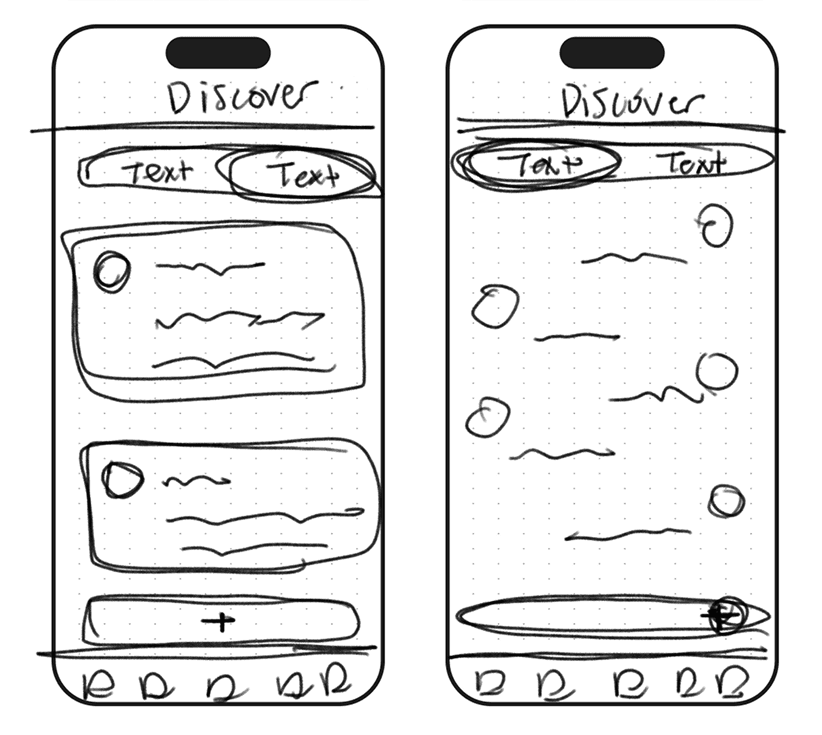
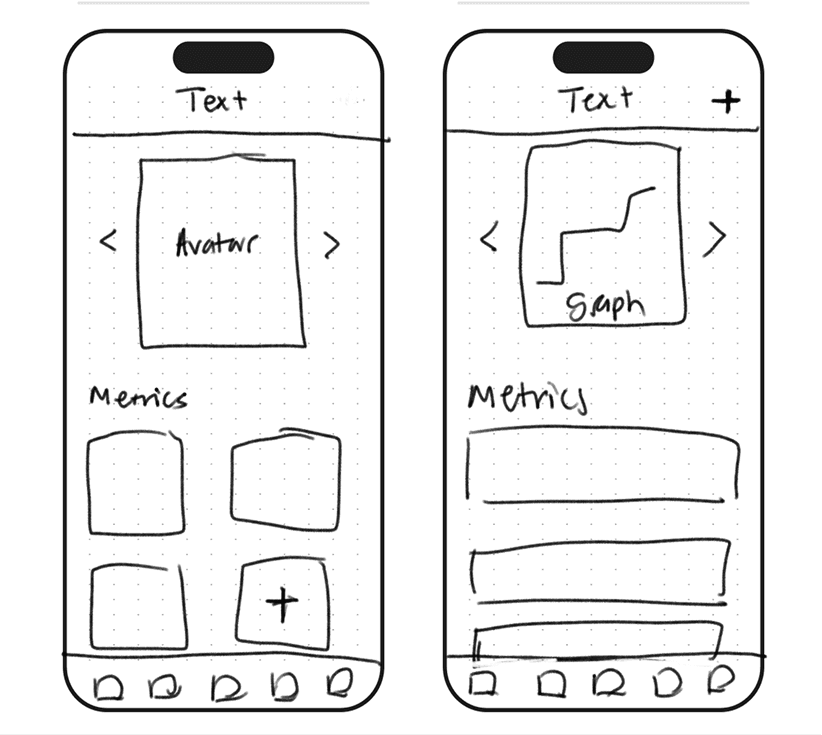
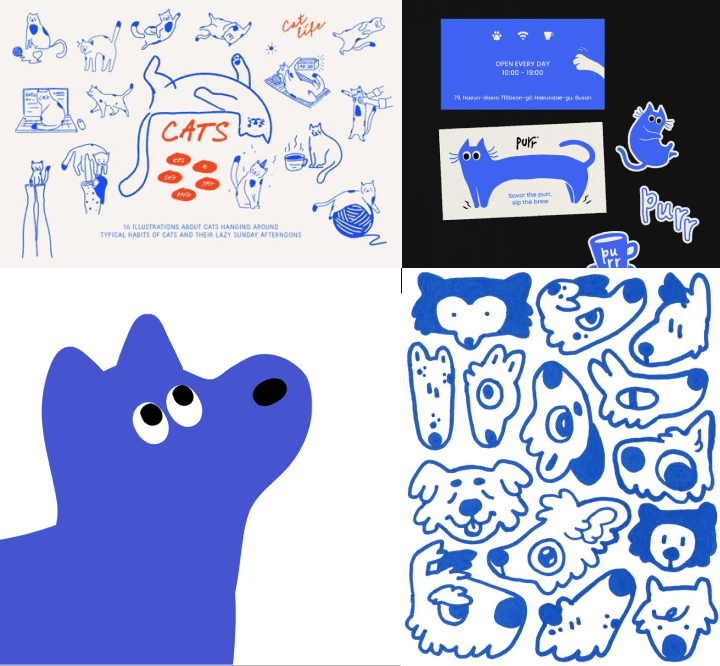
Our low-fidelity wireframes had all of our planned features included, but we later changed the layout to better fit user needs. While moodboarding, we decided to go for a hand-drawn look that felt playful and not sterile while retaining the professionalism of a health app.
Mid Fidelity
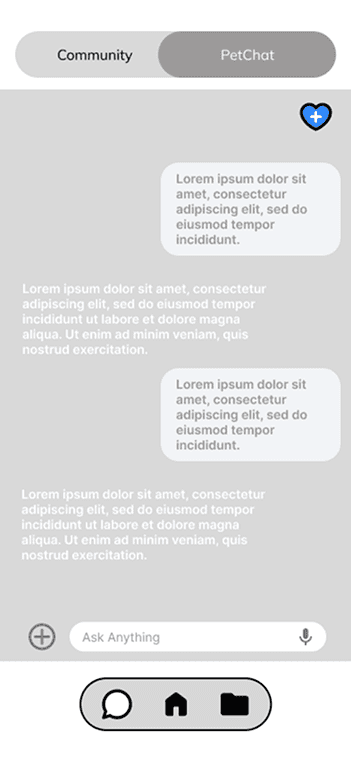
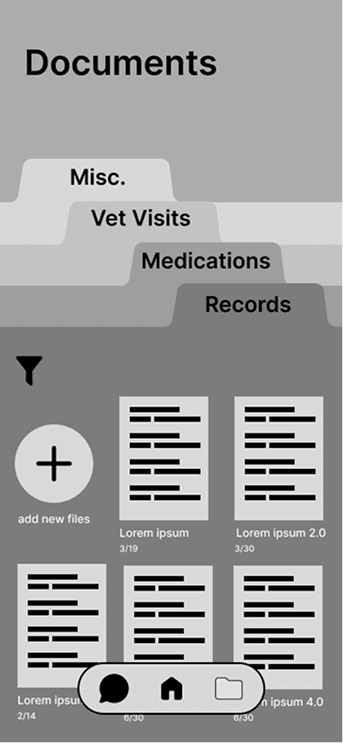
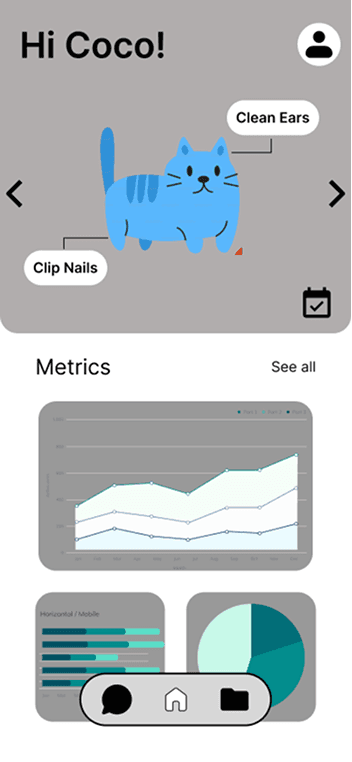
Our mid-fidelity wireframes are what we performed our initial user testing with. They included a floating nav bar that was intended to be minimal with only 3 buttons. Due to this minimalism, we had grouped our PetChat, Live Vet, and Community features (elaborated on later) together under a single icon as well as our Tasks and Metrics features.
User Testing
Our interview-style user testing yielded many insights that we used to changed several major flows to better fit users based on what they were saying.
Tasks & Metrics
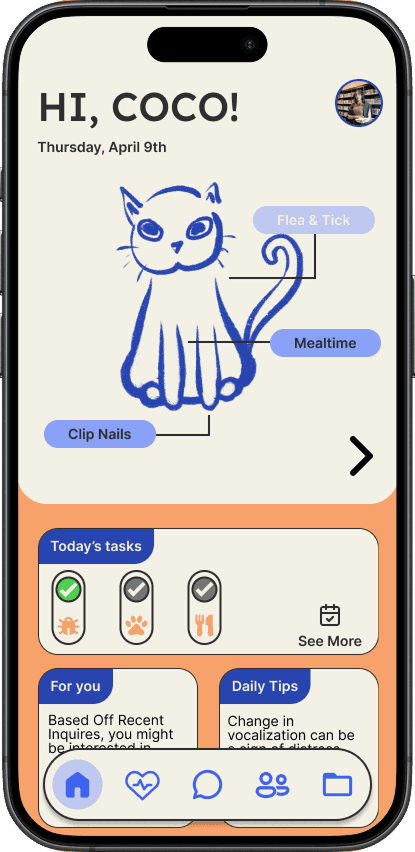
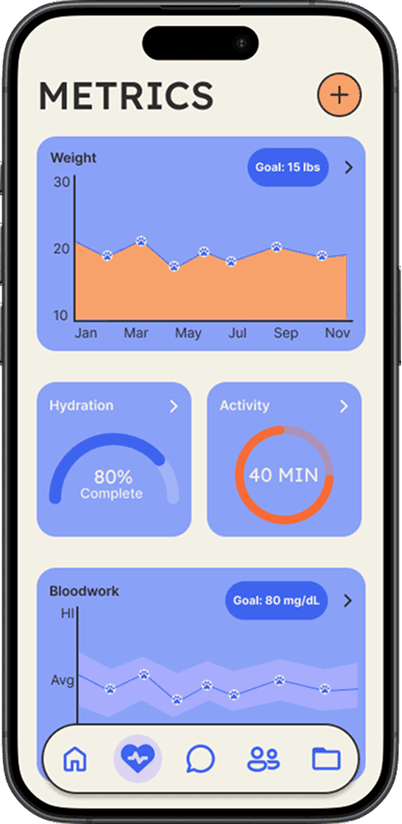
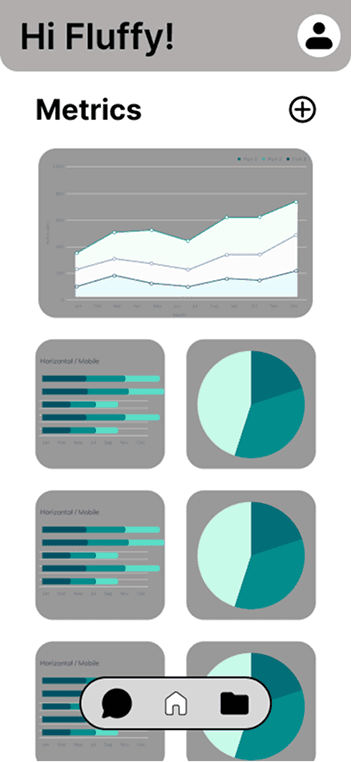
We initially had each feature occupying ½ of the home screen and buttons that would take users to expanded views of each. This proved to be unintuitive and hard to access according to testing. We added tasks to the homepage, as they were day-to-day activities compared to the long-term nature of tracking metrics. We gave the Metrics features its own page for easier access and readability of charts.
Separating the Community and PetChat/Live Vet features
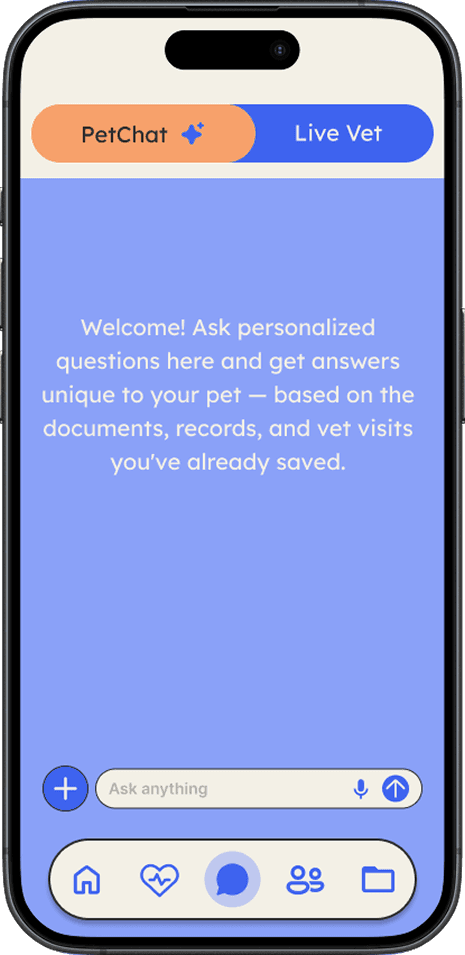
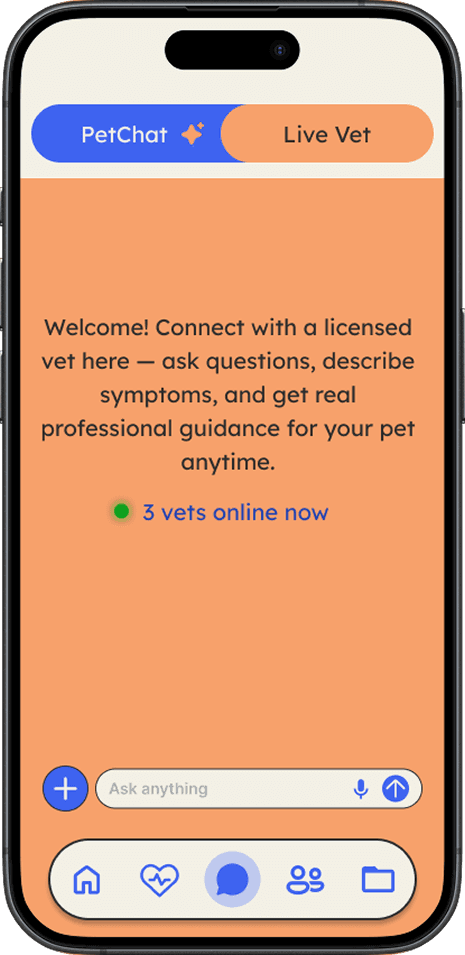
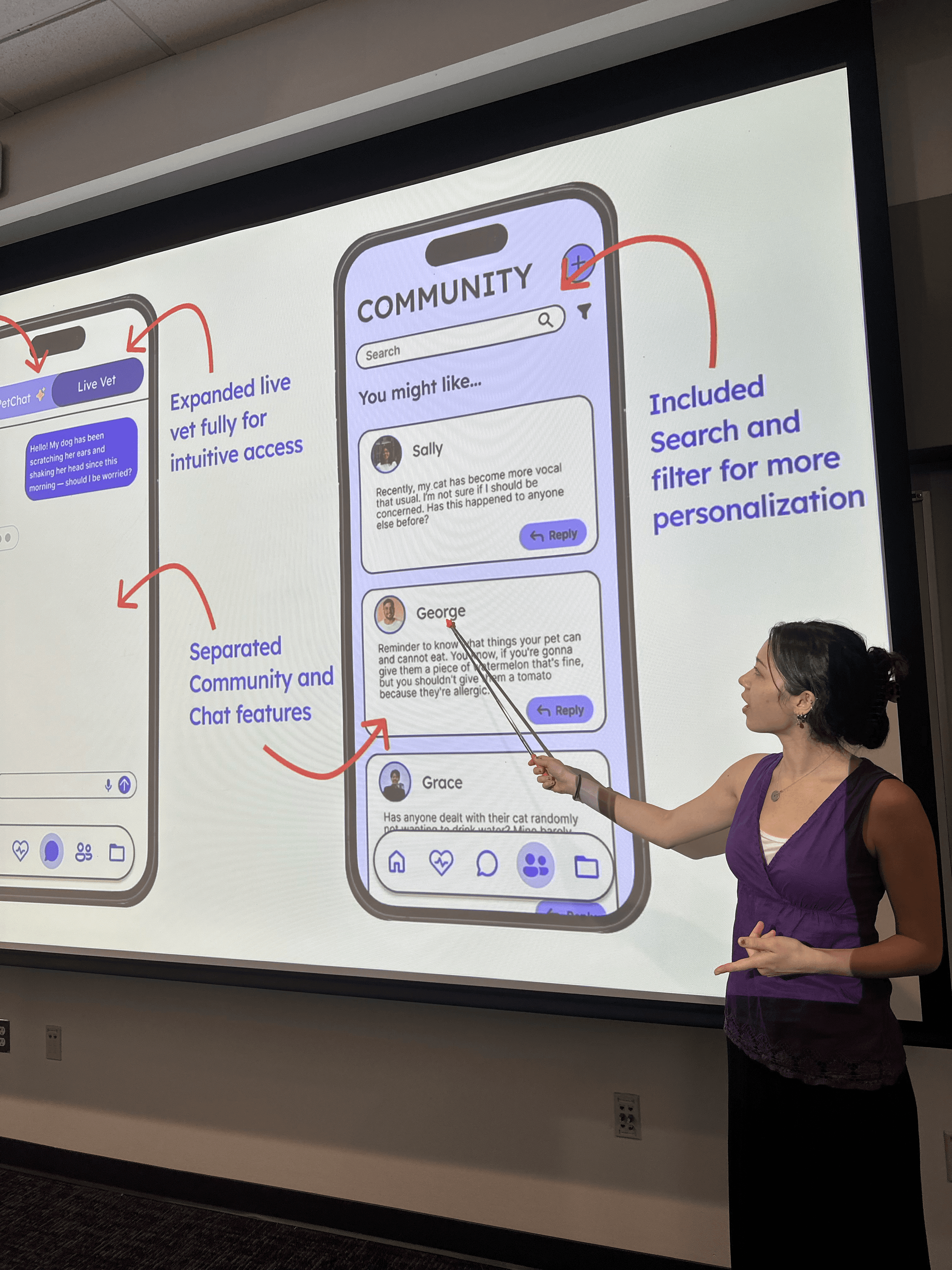
Though my partner and I felt as if Community, PetChat, and Live Vet were all best represented through a single chat icon, users believed otherwise. We received a lot of feedback about separating Community from the other two. This revealed to us that many users had completely different mental models than we did, and so we gave Community its own page and icon. Additionally, we expanded the Live Vet feature to have the same visual weight as the PetChat feature and added a sparkle icon to the PetChat feature to denote that it is an AI-based feature.
Documents layout
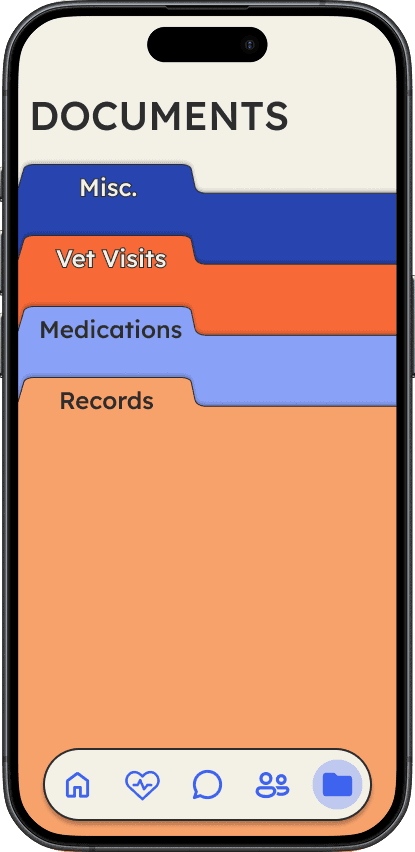
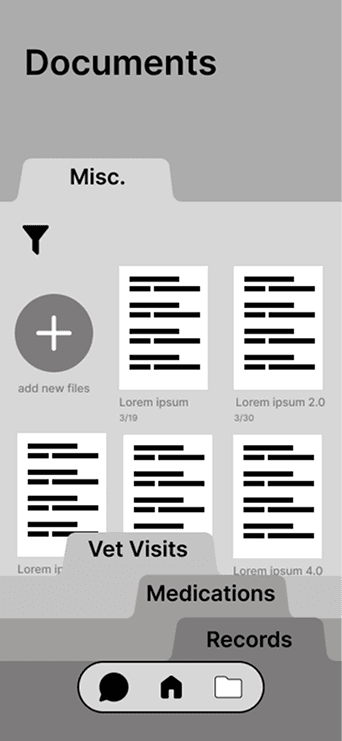
The documents page initially opened in order, meaning that if the top file was opened, the remaining document tabs would still take up the bottom portion of the screen. This made scrolling and looking for files within each folder less accessible. To counter this, we reduced the size of the tabs at the bottom and took inspiration from Apple Wallet for our file-opening method. Upon tapping the group of tabs at the bottom, all files go back to their starting point from which the user can then pick another one to open.
IV. Designs
Style Guide
After creating hi-fis based on our initial style guide and user-testing information, we decided to change the header font (initially Fredoka) to Lexend to better represent the visual direction we intended. Using Fredoka as a header in combination with our initial colors ended up presenting less professionally than we wanted, especially in combination with the dog and cat motifs I drew. Though we planned to have orange and a shade of purple as part of our palette, we ultimately took both out and opted for various shades of blue against cream to better fit WCAG standards and ensure a calmer visual cohesion.
Documents
Provides a centralized location for users to add their pets’ files and organize by name, date, or relevance. We made sure to have file uploads easily accessible due to inaccessible experience with other document apps.
Tasks
Tasks are various small chores that owners can choose to add to stay on top of their pet’s health or upkeep. They can see and check off their tasks for the day, as well as see the history of their completed tasks. Additionally, it shares “For You” insights and daily tips based on recent inquiries.
Metrics
Metrics allows users to add various metrics owners would like to track such as weight, bloodwork, and hydration levels. Users can get quick glances of stats over time so that they can stay more tapped into their pet’s health and see potential issues before they worsen.
PetChat & Live Vet
PetChat is an AI-agent that assists users by utilizing the uploaded documents to provide tailored responses to users’ pets. Adding new files is always easy to find, because accessibility of core actions was a priority in our design. We understand that not all people like to rely on AI for advice and that some issues are more pressing, so we added in a Live Vet feature as well. Users can be connected to a live vet at any time, similar to telehealth, but for animals. Here, the vets can provide advice or help users schedule appointments at local vets. This feature is intended to support users who may have questions or are not yet confident in making decisions about their pet’s health alone.
Community
The Community feature allows users to browse through posts made by other users, reply to them, and make their own posts. It is a hub for users to discuss their experience or ask questions and give advice. This feature is also intended to support users and build their confidence.
V. Takeaways & Future Plans
Takeaways
Experience with the Design Process: Through this project, I got first-hand experience with the design process from start to finish and was a primary contributor to an entire app design. I became well-versed in Figma and had to navigate dividing up work and design decisions with a partner.
Critique: Receiving critique can be scary at first given its vulnerable nature, but I learned to ask for it readily, knowing how much my mentors could help me improve. I also got better at evaluating my own designs and critiquing myself and my partner’s work before reaching out to external critics.
Flat Design: In an era of gradients, glassy layers, and the resurgence of skeuomorphism, I felt a pull to design for such aesthetics. However, I knew that our planned aesthetic would better serve our features and users. Though we stayed flat for the most part, we added a few gradients for variation and clarity in our Metrics feature. It was interesting to see the influence current design trends can have.
Future Plans
In the future, we’d like to add a share feature so that non-primary caregivers (dog/cat-sitters, spouses, co-caregivers, etc.) can access the same information as primary caregivers without going through the whole process over again. Additionally, we’d like to expand the community network by working towards deeper personalizations.
Reflection
This project was my longest-term project to date, and it helped me realize how much I love seeing a product through, end-to-end. I developed a deep care for the project by the end and enjoyed each part of the process. I grew as a designer, researcher, and person, and am very grateful to my partner, Norah Li, and my mentors, Jason Lin, Michelle Ngo, and Milly Zheng.